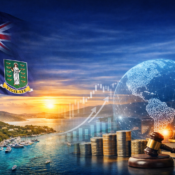
Offshore Is Not Dead: How the BVI Is Positioned for Legitimate Global Business
For years, “offshore” has been a misunderstood word.
Often associated by mainstream media with secrecy, shell companies, and regulatory arbitrage, offshore jurisdictions have been under intense global scrutiny. Recent headlines suggest offshore structures are disappearing under the weight of transparency laws and compliance reforms.
But the reality is very different.
Offshore is not dead. It is evolving.
And the British Virgin Islands (BVI) stands at the centre of that evolution.
The Death of Secrecy ≠ The Death of Offshore
Global tax transparency initiatives such as CRS, FATCA, and enhanced beneficial ownership requirements have fundamentally changed how offshore jurisdictions operate. Confidentiality without accountability is no longer acceptable.
However, this does not mean offshore structuring has lost its relevance.
What has disappeared is the abuse of offshore structures — not their legitimate use.
Today’s offshore structures are designed for:
- Cross-border operations
- Investor confidence
- Risk management
- Regulatory clarity
- Long-term governance
Secrecy has been replaced by compliance-backed privacy, and that distinction matters.
Why the BVI Remains Relevant in a Transparent World
Despite stricter regulations, the BVI continues to be one of the most widely used international business jurisdictions globally — and for good reason.
The BVI has not resisted transparency; it has integrated it into a modern legal and regulatory framework. This proactive approach has strengthened, not weakened, its credibility.
Key reasons serious businesses still choose the BVI include:
- A well-established, globally respected legal system
- Clear and predictable corporate legislation
- Political and economic stability
- Efficient company formation and maintenance
- Strong professional services ecosystem
- Global familiarity among banks, investors, and institutions
Rather than positioning itself as a secrecy jurisdiction, the BVI has positioned itself as a trusted jurisdiction for compliant international business.
How Regulation Is Filtering Out Bad Actors
One of the most important changes in the offshore world is that regulators are no longer focused on volume — they are focused on quality.
Economic Substance requirements, enhanced reporting, and audit readiness have made it increasingly difficult for:
- Dormant shell companies
- Paper entities with no real activity
- Structures created solely to obscure ownership
This is intentional.
By raising the bar, the BVI is filtering out entities that add regulatory risk and reputational damage — while retaining those that operate with genuine commercial purpose.
For compliant businesses, this shift is actually beneficial:
- Fewer bad actors means better banking access
- Reduced jurisdictional risk
- Greater investor confidence
- Stronger long-term stability
In short, regulation is acting as a gatekeeper, not a deterrent.
Why Serious Founders Still Choose Offshore Structures
Founders, family offices, investment funds, and global businesses continue to use offshore structures — not to avoid regulation, but to navigate complexity.
Serious founders choose the BVI because it allows them to:
- Hold international assets efficiently
- Structure cross-border investments
- Separate operational risk
- Access neutral, well-understood legal frameworks
- Support global fundraising and exits
In an increasingly global business environment, offshore structuring is not about hiding — it is about organizing.
The BVI provides a jurisdiction that is neutral, familiar, and accepted across borders, making it particularly attractive for international ventures.
FinTech, Digital Assets, and the New Offshore Narrative
The BVI’s evolution is especially visible in its approach to fintech and digital assets.
Rather than banning innovation or allowing unregulated experimentation, the BVI has taken a measured, regulatory-first approach to emerging technologies such as:
- Fintech platforms
- Tokenized structures
- Digital asset businesses
- Investment and fund vehicles
This balance — innovation with oversight — is precisely what institutional investors and serious founders look for.
As fintech and digital business models become more complex, jurisdictions that combine flexibility with regulatory credibility will continue to win. The BVI is positioning itself firmly in that category.
What “Good Offshore Structuring” Looks Like in 2026
The offshore structures of the future look very different from those of the past.
In 2026 and beyond, good offshore structuring is defined by:
- Clear commercial purpose
- Economic substance aligned with activity
- Transparent ownership records
- Proper governance and documentation
- Ongoing compliance, not one-time filings
- Professional oversight and advisory support
Offshore is no longer a shortcut — it is a strategic framework.
Businesses that approach offshore structuring with this mindset will continue to benefit from global flexibility while remaining compliant and credible.
Offshore Has Grown Up — And That’s a Good Thing
The offshore world is not shrinking. It is maturing.
Jurisdictions like the BVI are demonstrating that it is possible to balance transparency with efficiency, regulation with flexibility, and compliance with commercial practicality.
For legitimate global businesses, offshore structuring remains not only relevant — but essential.
The question is no longer whether offshore still works.
The real question is whether businesses are ready to use it responsibly.
Considering offshore structuring — or reviewing an existing structure?
In today’s regulatory environment, offshore solutions must be carefully designed, properly governed, and aligned with genuine commercial purpose. The right structure can support growth, protect assets, and provide long-term clarity — while the wrong one can create unnecessary risk.
Speak with experienced advisors who understand the modern offshore landscape.
Whether you are a founder, investor, family office, or global business, professional guidance is essential to ensure your offshore structure is compliant, efficient, and future-ready.
Offshore isn’t about avoiding the rules anymore — it’s about using the right framework, the right way.
Disclosure
This article is intended for general informational purposes only and does not constitute legal, tax, regulatory, or financial advice. Offshore structures and regulatory requirements vary based on jurisdiction and individual circumstances. Readers should seek independent professional advice before establishing, restructuring, or relying on any offshore arrangement. The British Virgin Islands regulatory framework is subject to change, and compliance obligations must be assessed on a case-by-case basis.